
The Dominion Mandate
Rethinking Adam's Authority Over Creation

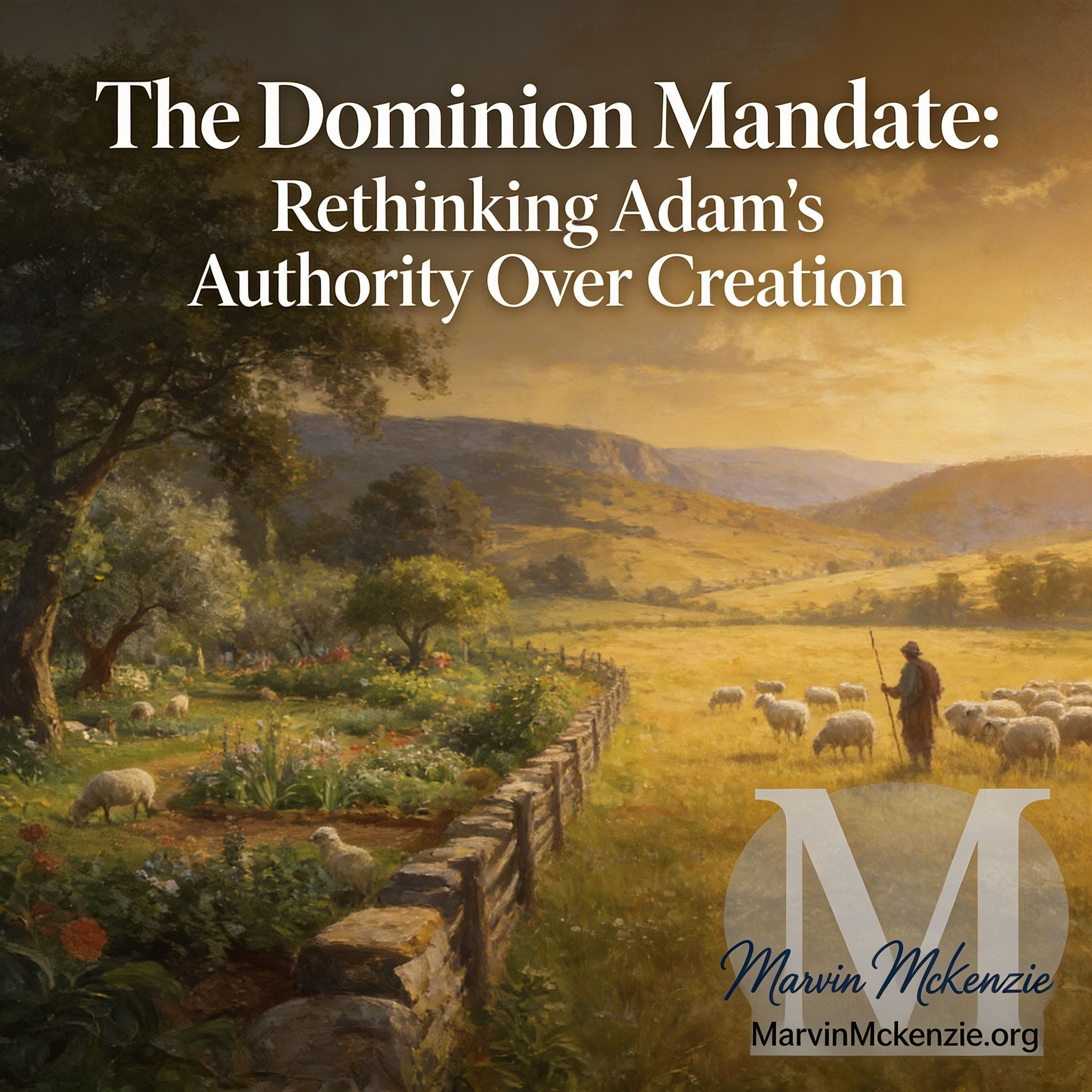
Many people assume that because Adam was given plants to eat in the Garden, he was strictly forbidden from ever eating meat. They treat the Garden as a health-food commune, assuming meat-eating is a “fallen” habit we picked up later. But look closely at the text: God’s instruction was a specific provision, not a permanent prohibition. He told Adam what was available in the Garden, but He never issued a command forbidding other food sources.
The key is the Dominion Mandate. God told Adam to subdue the earth and have dominion over every living thing. To thinkers like John Gill and Matthew Henry, this didn’t mean sitting back and watching the animals; it meant managing them, fencing them, and putting them to work. A steward who oversees a domain has the authority to use its resources. Scholars like Thomas Boston have long argued that this management—including the skill of shepherding—was part of the work given to humanity from the start. These skills weren’t sinful inventions of a fallen world, but the natural outworking of the responsibility God gave us.
When God finally gave the “green light” to Noah to eat meat, He wasn’t changing His mind or lowering His standards. He was formalizing an authority that had been there from the start. By the time we reach the New Testament, we are told that everything is fine if it’s received with thanksgiving. We were always meant to be the stewards of this creation, and we don’t need to apologize for our place at the top of the food chain.